
Transforming Raw Land into Thriving Communities
Introduction
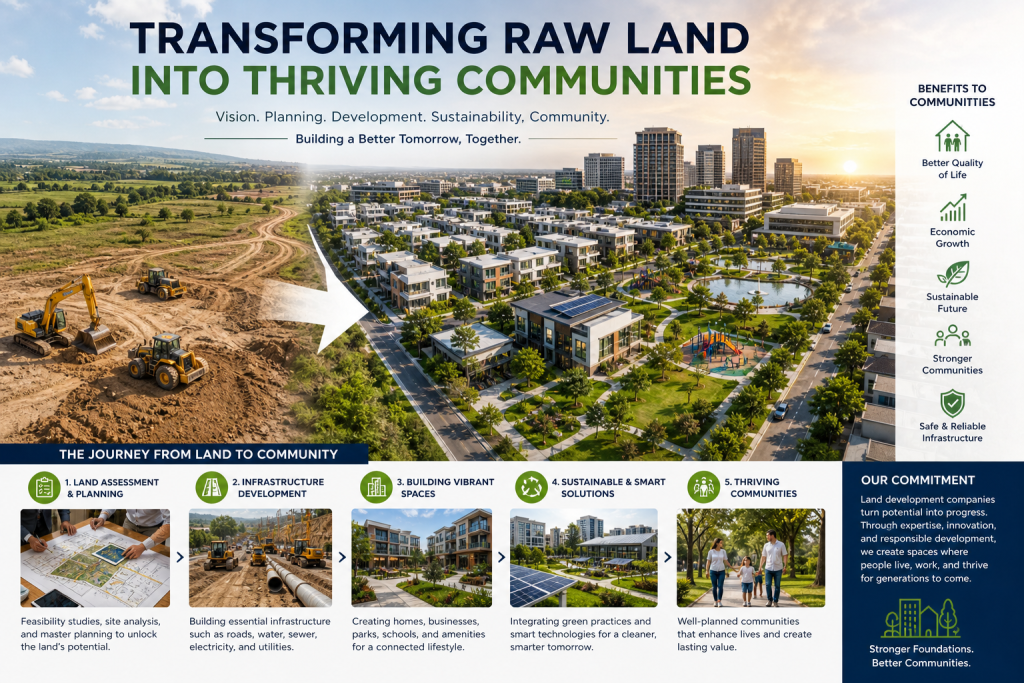
Transforming raw land into thriving communities is a powerful process that drives urban growth and shapes the way people live, work, and interact. What starts as an undeveloped or underutilized piece of land can evolve into a vibrant environment filled with homes, businesses, and essential amenities. This transformation requires vision, planning, and expertise, often delivered by experienced land development companies that specialize in turning potential into reality. Their role goes beyond construction—they create sustainable, functional, and future-ready spaces that benefit both people and the economy.
Understanding the Potential of Raw Land
Every successful development begins with understanding the land itself. Raw land may appear empty, but it holds immense potential depending on its location, topography, soil condition, and surrounding infrastructure. Before any development begins, detailed site analysis is conducted to evaluate feasibility. Land development companies carry out environmental assessments, zoning research, and market analysis to determine how the land can be best utilized. This early-stage evaluation ensures that the development aligns with both environmental considerations and market demand.
Strategic Planning and Design
Planning is the backbone of any thriving community. A well-structured master plan outlines how the land will be transformed into a balanced environment. This includes residential zones, commercial areas, public spaces, transportation networks, and utilities. Modern land development companies focus on creating integrated layouts that encourage accessibility and convenience. Thoughtful design ensures that communities are not only visually appealing but also practical and efficient for daily living.
Developers also consider future growth while designing these spaces. Flexible layouts and scalable infrastructure allow communities to expand and adapt over time, ensuring long-term sustainability and relevance.
Infrastructure Development: Building the Foundation
One of the most critical steps in transforming raw land is developing infrastructure. Without roads, water supply, electricity, drainage systems, and communication networks, land cannot support a community. Building this infrastructure requires coordination between engineers, contractors, and local authorities.
Land development companies play a key role in managing this phase, ensuring that all systems are reliable, efficient, and compliant with regulations. Proper infrastructure not only supports daily life but also enhances property value and attracts investment, making the community more desirable.
Sustainability in Modern Development
Sustainability has become a central focus in land development. As environmental concerns grow, developers are adopting eco-friendly practices to reduce their impact on natural resources. This includes preserving green spaces, using energy-efficient materials, and incorporating renewable energy solutions.
Many land development companies now prioritize sustainable urban planning, integrating features such as rainwater harvesting, solar energy systems, and eco-friendly construction techniques. These efforts not only protect the environment but also create healthier living spaces for residents, contributing to long-term community well-being.
Creating Community-Centric Spaces
A thriving community is more than just buildings—it is a place where people feel connected and engaged. Modern developments focus on creating spaces that encourage interaction and improve quality of life. Parks, recreational facilities, schools, healthcare centers, and shopping areas are essential components of a well-rounded community.
Land development companies ensure that these amenities are strategically placed to provide convenience and accessibility. By fostering social interaction and community engagement, these developments create a sense of belonging among residents, making them more vibrant and livable.
The Role of Technology in Development
Technology is revolutionizing the way land is developed. Advanced tools such as Geographic Information Systems (GIS), 3D modeling, and smart infrastructure solutions enable developers to plan and execute projects with greater precision.
Many land development companies are leveraging technology to improve efficiency, reduce costs, and enhance sustainability. Smart city features such as automated lighting, intelligent traffic systems, and digital connectivity are becoming increasingly common, transforming traditional communities into modern, tech-enabled environments.
Economic Impact of Land Development
Transforming raw land into developed communities has a significant economic impact. It creates job opportunities, attracts businesses, and stimulates local economies. As new developments emerge, they increase property values and generate revenue through investments and taxes.
Land development companies contribute to economic growth by creating environments that support business activities and attract investors. This not only benefits the developers but also strengthens the overall economy of the region.
Overcoming Challenges in Land Development
Despite its benefits, land development comes with challenges. Developers must navigate complex zoning laws, environmental regulations, and approval processes. Financial constraints and community concerns can also impact project timelines.
Experienced land development companies overcome these challenges through strategic planning, effective communication, and strong stakeholder relationships. By working closely with local authorities and communities, they ensure that projects are completed successfully and meet all regulatory requirements.
Adaptability and Future Growth
A key aspect of successful land development is adaptability. Communities must be designed to accommodate future changes, whether it’s population growth, technological advancements, or shifting market demands.
Land development companies focus on creating flexible spaces that can evolve over time. This includes scalable infrastructure, multi-purpose areas, and innovative designs that allow for future expansion. Such adaptability ensures that communities remain relevant and functional in the long run.
Safety, Compliance, and Quality Standards
Safety and compliance are essential in any development project. Developers must adhere to building codes, environmental regulations, and safety standards to ensure the well-being of residents.
Land development companies prioritize quality and compliance, ensuring that every aspect of the project meets required standards. This not only protects the community but also enhances trust and credibility among stakeholders.
Long-Term Community Management
The role of developers does not end with construction. Maintaining and managing the community is equally important. This includes maintaining infrastructure, managing public spaces, and addressing ongoing needs.
Many land development companies offer long-term management services to ensure that communities remain well-maintained and continue to thrive. This ongoing support helps preserve property value and ensures a high quality of life for residents.
Innovation Shaping the Future
Innovation is continuously shaping the future of land development. Concepts such as smart cities, mixed-use developments, and sustainable urban planning are redefining how communities are built.
Land development companies that embrace innovation are better equipped to meet the demands of modern society. By adopting new technologies and design approaches, they create communities that are efficient, resilient, and future-ready.
Conclusion
Transforming raw land into thriving communities is a complex yet rewarding process that combines vision, planning, and execution. It involves multiple stages, from understanding the land and designing layouts to building infrastructure and ensuring long-term sustainability.
Land development companies play a vital role in this transformation, bringing expertise and innovation to every project. Their efforts not only create functional spaces but also contribute to economic growth, environmental sustainability, and improved quality of life.
As the demand for well-planned communities continues to rise, the importance of strategic land development will only grow. By focusing on sustainability, technology, and community-centric design, developers are shaping a future where every piece of land has the potential to become a thriving, vibrant community.