
Tariffs and Construction Costs: Why Housing Affordability Starts at the Aggregate Pit, Not the Closing Table
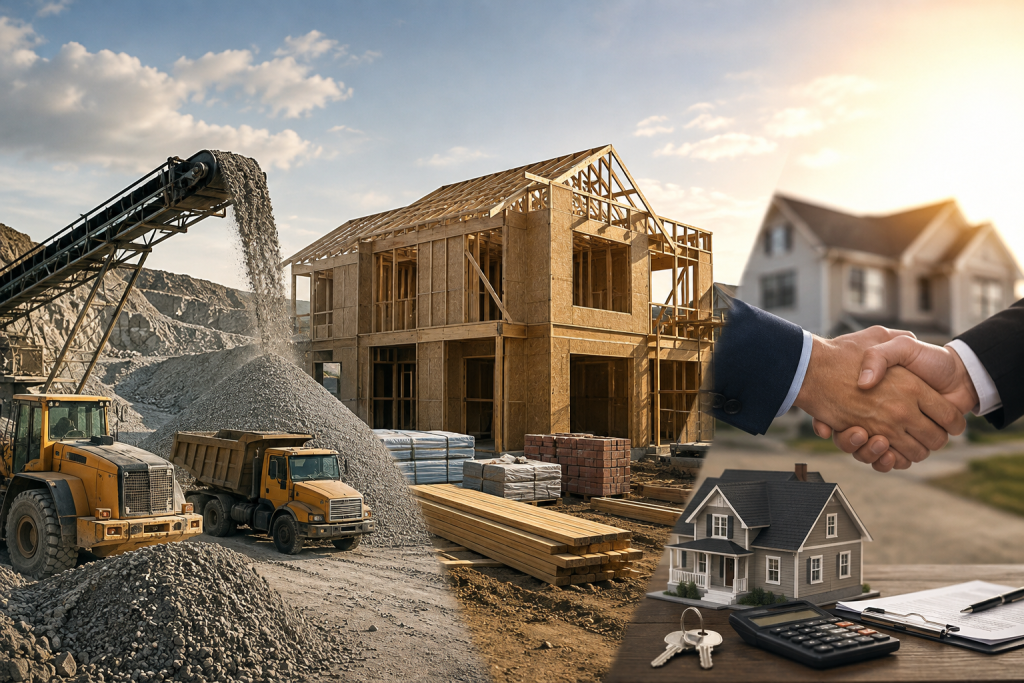
Everyone treats tariffs as a trade policy story. In civil construction, they’re a line-item story—and the numbers are bigger than most people realize.
Right now:
- Steel, aluminum, copper: 50% tariff
- Softwood lumber: 10% • Derivative wood products at 25%
- Aggregates (stone, sand, gravel—every site needs it): 20%
- Cement: doubled to 20%
- A new 50% tariff on ~$20B of Canadian goods (cement, lumber, plywood, electrical) takes effect around August 19
Add it up and the industry is looking at roughly 8% in aggregate cost escalation on a typical project—from tariffs alone. Not labor. Not land. Not permitting.
Here’s what doesn’t get said enough: none of that cost stays inside a contractor’s bid. It gets built into the price of the lot, the pipe in the ground—before a single house goes up. By the time a family closes, they’re paying every one of those percentage points. They just see it as a bigger mortgage, not a tariff.
I’ve run Yantis Company for 20 years and been in land development since 1998. I’ve been through enough cycles—tariff spikes, lumber shocks, 2008 and the shortage that followed — to know cost increases in civil construction don’t stay in civil construction. They flow straight through to housing affordability.
If we’re serious about that conversation, it has to start further upstream than the closing table. It starts at the aggregate pit, the steel mill, and the lumber yard.
Breaking Down the Numbers: What’s Actually Getting More Expensive
It’s worth sitting with these figures individually, because each one hits a different part of a development project, and together they compound in ways that aren’t always obvious from a single bid line.
Steel, aluminum, and copper at 50%. These aren’t niche materials — they’re structural. Steel goes into rebar, framing connectors, and utility infrastructure. Copper runs through every electrical system a project touches, from underground service to the wiring inside a finished home. A 50% tariff on inputs this fundamental doesn’t just raise the cost of a single line item; it raises the cost of nearly every trade that touches metal.
Softwood lumber at 10%, derivative wood products at 25%. Lumber has already been through enough volatility over the past several years that builders have grown almost numb to it. But the derivative products — engineered lumber, plywood, OSB — are where framing packages actually live, and a 25% tariff there compounds quickly across a full home build.
Aggregates at 20%. This is the one that gets overlooked outside the industry, and it shouldn’t be. Stone, sand, and gravel go into literally every site — road base, concrete mix, drainage, foundations. There’s no substitute material and no way to build around it. When aggregate costs rise, it’s not a line item a project can engineer its way out of.
Cement doubled to 20%. Cement is foundational in the most literal sense. It’s in every slab, every driveway, every piece of site infrastructure that goes in before vertical construction even starts. Doubling this tariff means the cost of simply preparing a site for construction has jumped meaningfully, independent of anything happening above ground.
The new Canadian tariff. A 50% tariff on roughly $20 billion in Canadian goods — cement, lumber, plywood, electrical components — taking effect around August 19 adds another layer on top of materials that were already facing pressure. Canada has long been a major supplier for several of these categories precisely because of proximity and capacity, which makes this tariff especially disruptive for developers who’ve built supply relationships north of the border over years, not months.
Put together, these aren’t five isolated cost increases. They’re five increases hitting the same projects simultaneously, on materials that show up at nearly every phase of a development — from the first cut of dirt to the final electrical inspection.
Why This Doesn’t Stay a “Construction Industry” Problem
The most important part of this conversation is also the part that gets skipped most often: tariff costs on civil construction materials don’t stop at the contractor. They move.
A developer facing higher costs for aggregate, cement, and steel doesn’t absorb that cost indefinitely — it gets built into the price of the finished lot. A builder purchasing that lot factors the higher acquisition cost into the price of the home. And a family closing on that home simply sees a larger number on their mortgage, with no visibility into the fact that a meaningful chunk of that increase traces back to a tariff schedule that took effect months before they ever toured the property.
This is exactly what makes tariff-driven cost escalation different from a lot of other housing affordability conversations. Zoning reform, permitting delays, and labor shortages tend to get discussed openly as affordability issues, because their effects are more visible and their debates happen closer to the public eye. Materials cost escalation from trade policy is quieter. It shows up as “just” a bigger mortgage payment, not as a tariff — even though, dollar for dollar, it’s often just as significant.
What Twenty Years in Land Development Teaches You About Cost Cycles
Having run Yantis Company for two decades, and worked in land development since 1998, this isn’t the first material cost shock to move through a project pipeline — and it won’t be the last. The lumber price spikes of recent years, the aftershocks of the 2008 downturn and the material shortages that followed, and now this current round of tariff increases all share a common pattern: costs enter the system upstream, well before a shovel hits the ground, and by the time they reach a homebuyer, they’ve already been baked into a number that looks like nothing more than “the market.”
What’s different about tariff-driven cost increases is how directly traceable they are. A lumber shortage caused by mill closures or supply chain disruption is, in some sense, a market event. A 50% tariff on steel or a doubled cement tariff is a policy decision with a known percentage and a known effective date. That traceability is exactly why these costs deserve more attention in the broader housing affordability conversation than they typically get.
Why the Affordability Conversation Needs to Start Upstream
Housing affordability discussions tend to focus heavily on the closing table — interest rates, down payment assistance, first-time buyer programs. Those conversations matter, but they’re addressing the symptom, not the source, when a meaningful share of a home’s cost was determined months earlier at the aggregate pit, the steel mill, and the lumber yard.
If the industry, policymakers, and the public are serious about tackling housing affordability, that conversation needs to move further upstream than it currently does. It needs to account for the fact that an 8% aggregate cost escalation on a typical project — from tariffs alone, before labor, land, or permitting even enter the picture — doesn’t disappear by the time a family sits down to sign closing documents. It shows up in their mortgage, whether anyone explains where it came from or not.
The Bottom Line
Tariffs get discussed as trade policy because that’s where the headlines live. But for anyone in civil construction and land development, they’re a line-item reality that shapes project budgets months before a home is ever listed for sale. Steel, aluminum, copper, lumber, aggregates, and cement aren’t optional inputs—they’re the literal foundation of every development project, and when their costs rise simultaneously, the effects don’t stay contained to a contractor’s bid.
They move through the lot price, through the builder’s cost basis, and ultimately into the mortgage a family signs — quietly, without a tariff line item ever appearing on their closing disclosure. Understanding that chain is the first step toward a more honest conversation about what’s actually driving housing costs in this country, and it’s a conversation that has to start at the source: the aggregate pit, the steel mill, and the lumber yard.