
How Single-Family Land Development Drives Long-Term Residential Investment Returns
Single-family land development continues to be one of the most reliable drivers of long-term residential investment returns, particularly in high-growth markets like San Antonio. Demand for thoughtfully planned residential communities remains strong as families seek quality housing supported by infrastructure, amenities, and access to employment centers.
Yantis Land specializes in single-family land development by focusing on:
- Market-driven site selection based on growth patterns and demand
- Efficient lot design aligned with builder needs and buyer preferences
- Infrastructure planning that supports faster home delivery
- Strategic partnerships with leading homebuilders
San Antonio’s population growth, expanding employment base, and ongoing infrastructure investment continue to support strong residential fundamentals. Leveraging 27 years of local development experience, Yantis Land positions projects to perform well across market cycles, delivering stable value to builders, investors, and the surrounding communities.
San Antonio’s exceptional growth fuels sustained housing demand, and single-family community development is a proven way to capture that opportunity. In 2023 some 22,000 people moved to San Antonio, making it the fastest-growing U.S. city that year. Likewise, the local economy remains strong: nonfarm payrolls grew by ~29,000 jobs (about 2.5%) in the 12 months ending Sept 2024 and unemployment hovers well below national levels. This expansion of population and jobs underpins a tight housing market – HUD analysts note the home sales market is essentially balanced with only a ~1.8% vacancy rate – so demand for new homes remains high. Families continue to seek quality neighborhoods close to schools, amenities and job centers. By planning communities with streets, parks, and utilities in place, developers meet this demand and create value that accrues to investors over the long run.
Yantis Land’s approach exemplifies the key elements of a successful single-family development:
- Market-driven site selection based on population and job growth patterns
- Efficient lot design tailored to builder needs and homebuyer preferences
- Infrastructure planning (roads, sewers, utilities) that accelerates homebuilding
- Strategic homebuilder partnerships ensuring ready demand for finished lots
Each of these components contributes to stability and higher returns. For example, studies note that “finished lots in good locations are becoming a rare commodity,” since most homebuyers prefer shorter commutes. By carefully choosing sites in fast-growing corridors, a developer secures lots that command higher prices and sell quickly. Building lots with layouts and amenities that align with local builders also helps projects absorb faster. And by completing infrastructure early, developers shorten the time to home delivery, improving investor cash flow.
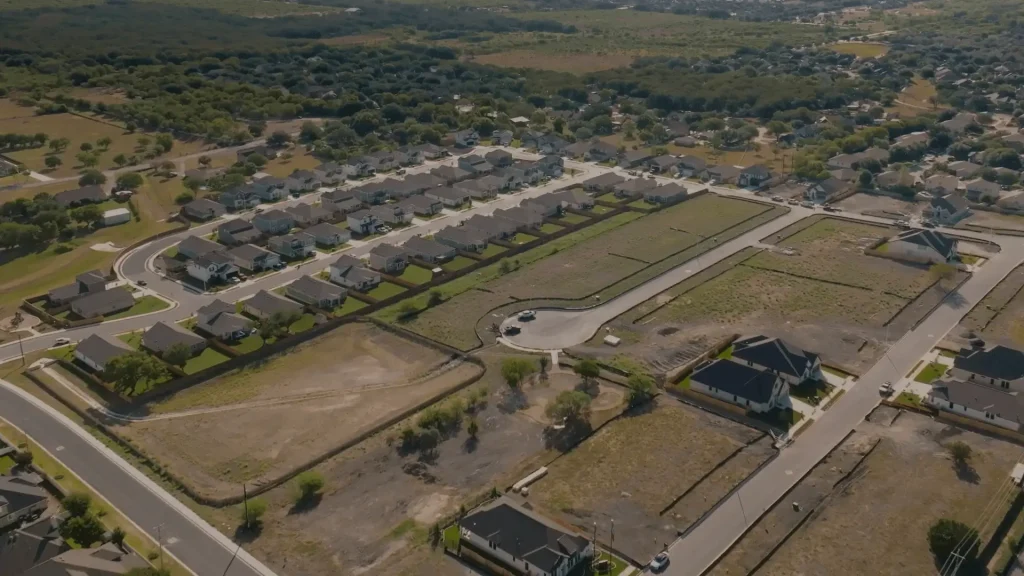
After site acquisition, single-family projects proceed with horizontal development – grading the land and installing all necessary infrastructure. This is the groundwork that turns raw acreage into finished lots ready for builders. As Milar Capital explains, horizontal development “includes all necessary infrastructure such as roads, water and sewer systems… transforming raw land into finished, build-ready lots”. In practice, once roads and utilities are in place, homebuilders can begin vertical construction almost immediately, which minimizes delays and financing costs. The image above illustrates this stage: streets and utilities are in, and lots are platted out. Not surprisingly, finished lots in desirable locations sell out fast. In recent data, public and private homebuilders together purchased about 94% of all new U.S. finished lots (66% by large public builders, 28% by private builders). In other words, well-located single-family lots are effectively pre-sold to builders in high-demand markets.
This pipeline of buyers is a key reason single-family land development is attractive to investors. With a project’s lots quickly absorbed by strong builders, the developer often realizes revenue on a predictable schedule. Industry experts note that single-family development projects generally target robust investor returns. Milar Capital, for example, highlights that such projects “provide investors with robust returns through meticulous planning, expert project management, and a streamlined process”. While each project varies, many developers aim for net internal rates of return in the high teens or above, reflecting the combined value of rising home prices and efficient lot sales. In San Antonio, rising home and lot values — driven by population growth and limited supply — support these returns. According to HUD, the San Antonio metro added 2.77 million people as of late 2024, growing roughly 1.8% per year, and household formation continues apace. In short, a well-positioned single-family community can capture both lot sale margins and the upside of rising home prices in a hot market.
Benefits for Builders, Investors, and Landowners
- Landowners benefit by partnering with developers or selling to them at peak valuations. Raw land in a growth area can yield “significant returns when sold to builders or investors”. Rather than holding undeveloped acreage, landowners often realize a premium by contributing land into a residential project, sharing in the value uplift that comes from entitlements and infrastructure. Historical data shows land as an asset averages ~10% annualized gains over time, and development amplifies those gains in fast-growing markets.
- Homebuilders gain access to move-in-ready lots at planned communities. By the time builders purchase finished lots from Yantis Land, for example, the streets, utilities and even common-area amenities are already in place. This turnkey inventory dramatically reduces builders’ lead time and carrying costs. In fact, recent surveys show major builders are increasingly snapping up the majority of available lots. Having a reliable developer partner means builders can plan their construction schedules with confidence, knowing lots will be delivered on time in desirable neighborhoods.
- Investors and developers reap stable, long-term cash flows. Land development is inherently a multi-year endeavor, but the payoff is a string of lot sales (and eventually home sales) over time. Each lot sale generates revenue that more than covers development costs. Projects are financially modeled conservatively with contingencies, and experienced developers (like Yantis Land) work to ensure on-budget delivery. The result is a lower-volatility real estate play: investors are effectively selling homes to end-buyers via builder partners, and those homes benefit from the underlying San Antonio market strength. As noted above, seasoned developers typically achieve double-digit IRRs on these deals, while also providing a degree of hedge against inflation and market cycles through tangible land value.
In essence, single-family subdivision development aligns the interests of all parties. Landowners unlock value from land that has become scarce, builders obtain quality lots to meet homebuyer demand, and investors earn healthy returns underpinned by fundamental demand growth. In San Antonio’s case, all signs point to continued momentum: the region is projected to keep adding tens of thousands of new residents each year, and the city is investing in roads, schools and parks to support that growth. With 27+ years of local development experience and over $1.3 billion in land and infrastructure projects completed, Yantis Land is well positioned to execute these community developments. Its track record of on-time, on-budget finished-lot deliveries ensures that projects will perform solidly across market cycles, delivering long-term, stable value to builders, investors, and the San Antonio community alike.
Why Builders, Investors, and Landowners Choose Yantis Land
Builders, investors, and landowners choose Yantis Land because the firm combines experience, execution, and local insight into a single, reliable development platform. Every project is approached with a long-term perspective, ensuring decisions support both immediate goals and future performance.
The Yantis Land approach is built on:
- More than 27 years of proven industry leadership
- Strong relationships with builders, engineers, and municipalities
- Transparent communication throughout the project lifecycle
- Disciplined execution focused on long-term value creation
Rather than operating as transactional developers, Yantis Land forms long-term partnerships. This relationship-driven approach supports successful outcomes across multiple projects and market conditions while maintaining consistency, trust, and accountability.

Partner With a Trusted San Antonio Real Estate Development Firm
Choosing the right development partner is critical to the success of any project. Yantis Land delivers real estate land development solutions in San Antonio that combine experience, strategic planning, and disciplined execution.
Whether you are:
- A builder seeking finished residential lots
- An investor evaluating land development opportunities
- A landowner looking to unlock property value
Yantis Land provides the leadership, expertise, and local insight needed to move forward with confidence and clarity.
Frequently Asked Questions About Land Development in San Antonio
1- What does a land development company do?
A land development company manages the process of transforming raw land into build-ready properties. This includes land acquisition, entitlement, infrastructure planning, construction coordination, and delivering finished lots to builders or development partners.
2- Why choose a local San Antonio real estate developer?
Local developers understand zoning requirements, municipal processes, market demand, and regional growth patterns. Working with a San Antonio-based development firm helps reduce delays, control costs, and improve long-term project outcomes.
3- What is construction consulting in land development?
Construction consulting provides expert oversight during planning and execution. It includes cost evaluation, contractor coordination, schedule management, and risk mitigation—helping projects stay on track from planning through completion.
4- How does single-family land development create long-term value?
Single-family land development creates value by aligning lot design, infrastructure, and location with builder demand. Well-planned developments support faster absorption, stable pricing, and long-term residential investment performance.
5- Who should partner with a land development firm?
Builders, investors, and landowners benefit most from partnering with a land development firm. Whether delivering finished lots, structuring joint ventures, or guiding development strategy, experienced firms help maximize land value and reduce risk.