
How Government Approval Delays Increase Land Development Costs and Home Prices
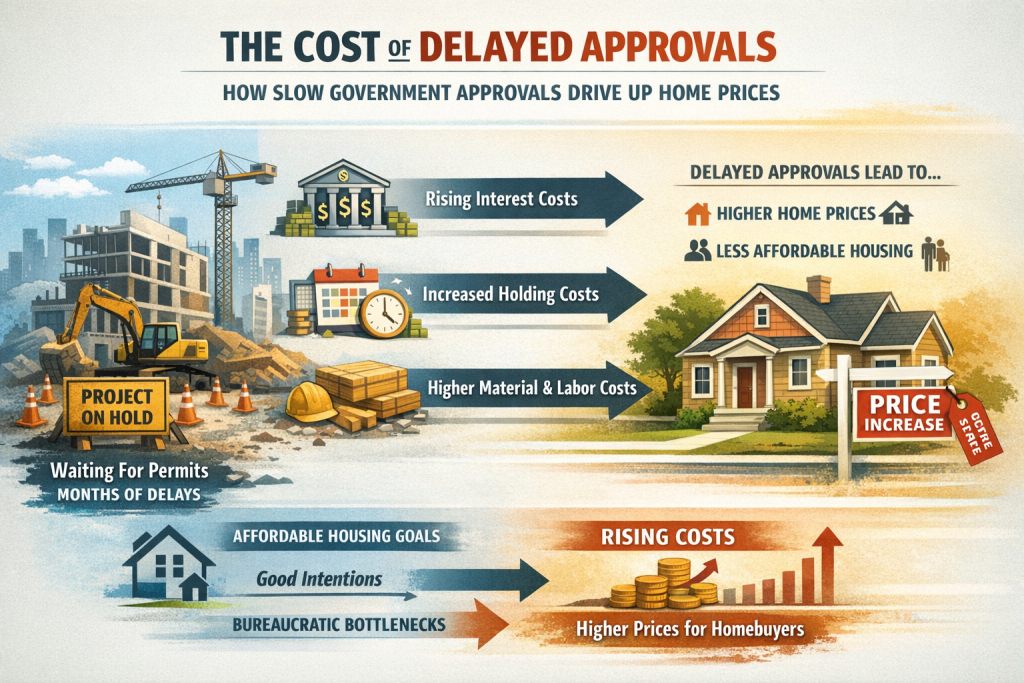
Housing affordability continues to be one of the biggest challenges facing growing communities. Many cities and counties emphasize the need for affordable housing, yet the processes required to approve new developments often work against that goal. One of the most overlooked factors driving up housing prices is government approval delays in land development.
When approvals for even simple developments take months—or sometimes close to a year—it creates a ripple effect of increased costs. Those costs do not simply disappear; they eventually get passed on to the homebuyer.
The Land Development Approval Process
Before any residential community can be built, developers must go through a series of approval steps to ensure the project meets local regulations and infrastructure standards. This typically includes:
- Zoning and land use reviews
- Engineering plan approvals
- Environmental and drainage evaluations
- Utility coordination
- Permits and inspections
- Final subdivision approvals
While these steps are essential for responsible development, long approval timelines can significantly slow down projects.
Land Developers in many areas are experiencing delays that can stretch for months. In some cases, projects are waiting nearly a year for relatively simple approvals, which slows down housing development and increases overall project costs.
A Real Example: Delays in Bexar County
A clear example of this challenge can currently be seen in Bexar County, where developers are facing extended waiting periods for approvals on straightforward development projects.
In some situations, developers have been waiting almost a full year for the county to issue approvals for projects that would normally move through the process much faster. While review and oversight are necessary, such long delays can create serious challenges for land development projects.
These delays affect not only developers but also the broader housing market and the people looking to buy homes.
Why Delays Increase Development Costs
Land development is a capital-intensive process, and time is a major factor in project costs. When approvals are delayed, several financial pressures begin to add up.
1. Carrying Costs on Land
Most developers finance land purchases through loans or investment capital. While waiting for approvals, they must continue covering expenses such as:
- Loan interest
- Property taxes
- Insurance
- Land maintenance costs
If approvals are delayed by many months—or close to a year—these carrying costs can increase significantly.
2. Rising Construction Costs
Construction costs rarely remain stable for long. When development approvals take longer than expected, developers may face higher prices for:
- Building materials
- Labor and contractors
- Infrastructure improvements
- Equipment and fuel
Even moderate increases in these areas can significantly raise the total cost of a development project.
3. Interest Rate and Market Changes
Long approval timelines also expose projects to economic changes. Interest rates may increase, financing conditions may change, and market demand can shift.
All of these factors add risk and additional costs to land development projects.
4. Additional Administrative and Engineering Work
When projects are delayed, they often require:
- Updated engineering plans
- Additional reviews or revisions
- Ongoing coordination with consultants and government departments
Each additional step increases administrative and professional service costs.
How These Costs Affect Homebuyers
The increased costs created by approval delays ultimately make their way into the final price of homes.
Developers must factor all project expenses into the cost of building new housing. When development becomes more expensive due to delays, the homes built within those developments also become more expensive.
This creates a contradiction for many communities. Cities and counties frequently promote initiatives to encourage affordable housing, yet lengthy approval processes can unintentionally make housing less affordable.
Slower Approvals Also Reduce Housing Supply
Approval delays do more than increase costs—they also slow the delivery of new housing.
When developments take longer to approve:
- Fewer projects move forward each year
- Housing supply grows more slowly
- Demand continues to increase
When supply cannot keep up with demand, housing prices naturally rise.
The Importance of Efficient Approval Processes
Efficient approval processes do not mean lowering development standards or eliminating oversight. Instead, they focus on predictable timelines, clear communication, and streamlined review systems.
When approvals are handled efficiently:
- Developers can move projects forward faster
- Construction can begin sooner
- Housing supply increases
- Development costs remain more stable
- Homes become more affordable for buyers
This balance benefits both communities and future homeowners.
Moving Toward Solutions
Addressing housing affordability requires cooperation between developers, planners, and local governments. Improving approval timelines can be an important part of that effort.
Some potential improvements include
- Clearer review timelines
- Improved coordination between departments
- Digital permitting and review systems
- More predictable approval processes
These types of improvements can help reduce delays while still maintaining responsible development standards.
Final Thoughts
Government approval delays are rarely discussed in conversations about housing affordability, but they play a significant role in shaping the cost of development.
As seen in areas like Bexar County, long waiting periods for development approvals can increase costs, slow down housing construction, and ultimately raise home prices for buyers.
If communities truly want to support affordable housing, improving the efficiency and predictability of the land development approval process must be part of the conversation.